
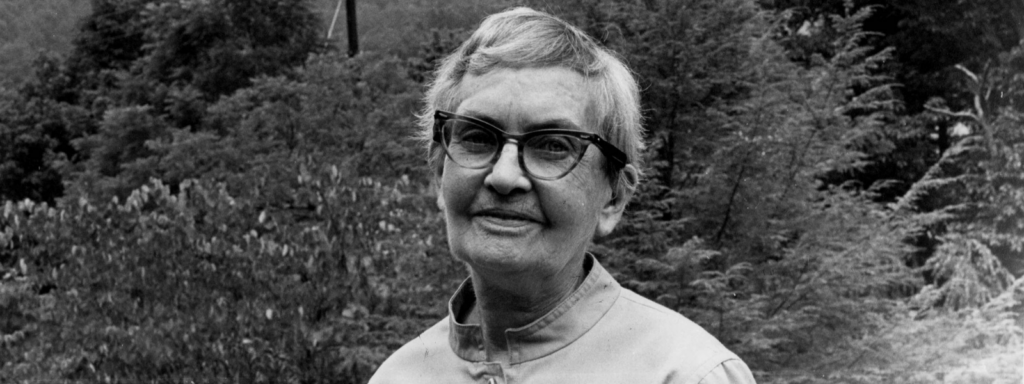
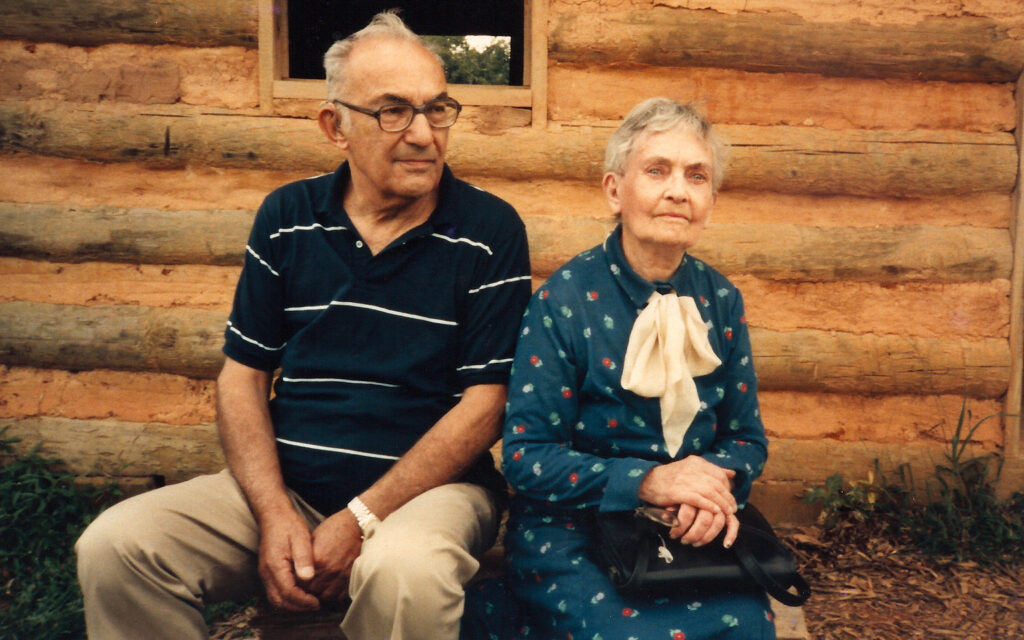
Early this spring, KNLT announced the establishment of the Arnow Woodland Preserve in Pulaski County, Kentucky. We were honored to receive the 139 wooded acres on the Cumberland Plateau as a gift from the heirs of treasured Kentucky author Harriette Simpson Arnow and her husband, Harold Arnow. Under KNLT’s stewardship, the property will remain forever wild.
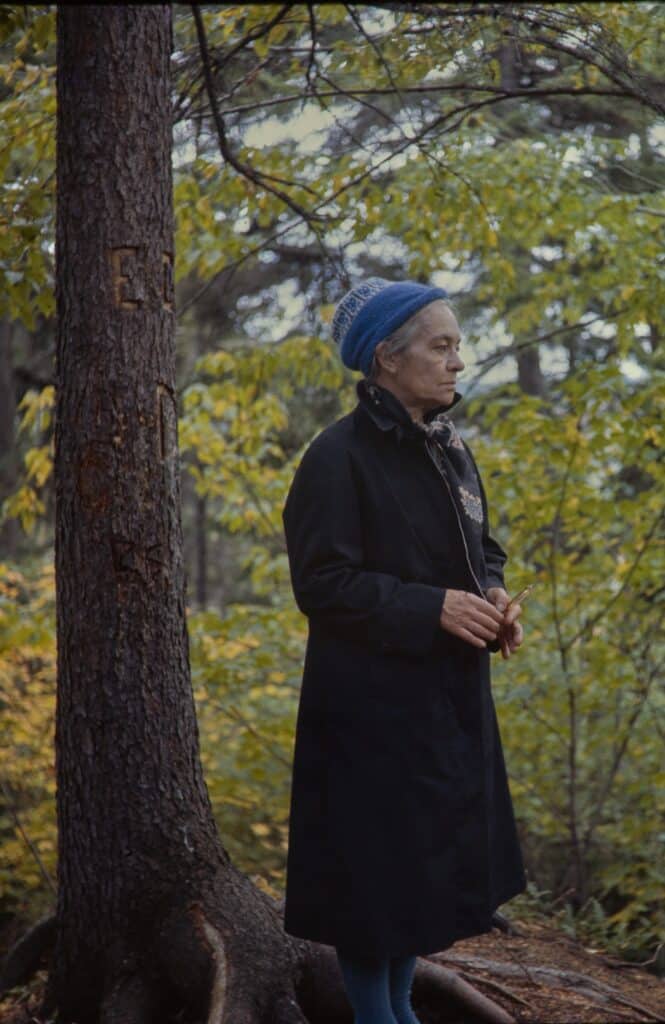
The Arnows purchased the tract in Keno, Ky., in 1939 as a subsistence farm which they managed while also working on their respective writing projects. Life as homesteader artists was, by turns, exciting, rewarding, and very difficult. In 1944, the Arnows moved to Detroit, where Harold worked as a reporter, and Harriette continued to work on the novels, essays, and social histories that defined her as one of the most significant southern authors of the 20th century.
A native Kentuckian from neighboring Wayne County, Arnow was deeply invested in the geography and cultural history of Appalachia. Her work—inexorably tied to Keno and the region she loved so dearly—lies at the intersection of art and conservation.
In celebration of her birthday, our July Wildlands Blog excerpts a few of Arnow’s personal and published reflections on the land she and Harold called home for five years. Her journal entries and nonfiction provide a powerful glimpse into the unaffected clarity of Arnow’s observation. In turn, this patient, clear-eyed reverence for rural Appalachia is recognizable as the heartbeat of critically acclaimed works like the best-selling novels Hunter’s Horn and The Dollmaker, and important social histories like Seedtime on the Cumberland and The Flowering of the Cumberland.
The following is excerpted from “Progress Came to Our Valley,” published in The Nation in August 1970. In these introductory paragraphs, Arnow provides the reader with a brief history and survey of the property.
We were fools, of course, but the abandoned 160-acre farm
on Little Indian Creek of the Big South Fork of the Cumberland in Kentucky seemed perfect for a couple who wanted to get away from the city world of 1939. We planned to live simply, farming only enough to grow our food. This would leave plenty of time for doing what we wanted to do; for me, that meant writing.
Surrounded by green walls of hillside woodlands, cut by the creek, bordered by the river, the land was cheap, beautiful, and remote…The word was little used then, but our place was on the western edge of what is now called Appalachia…
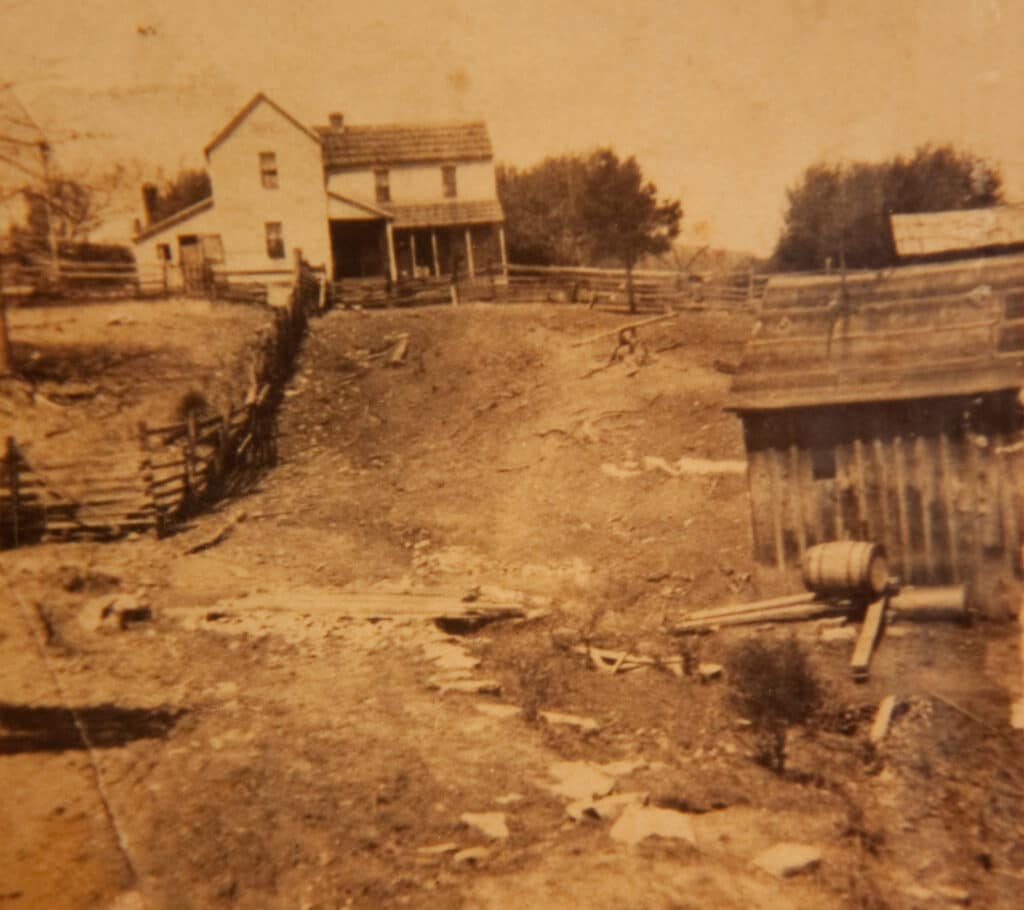
The house where we intended to live… had long ago begun as a log house, two huge rooms below, two above. The splendid chimney of hand-hewn stone was even older. According to an elderly neighbor, it had been put up first for a house built around 1803 that had stood some distance away above the river.
…The house, with its back to the gullied hillside, sat on a wide bench of land that sloped gently down to the creek bluff. This rolling land and a narrow strip of fertile soil below the river bluff was more than enough land for our needs. The roughest, and what I thought the most beautiful part of our place, was the sixty or so acres on the towering ridge side across the creek, never plowed, all in young timber. I never tired of looking at it and at the forested land on either side. It was a varied sight: beech and maple on the lower slopes, oak and poplar higher up, and on the crest itself great pines that for some reason had never been cut. The view changed not only with the seasons but, like the sea, with the weather and the time of day.
…The valley people, both women and men, were masters of their environment; we were not. We could grow our own food but, slow workers that we were, had little time for anything else, and little money for the hiring of help. Our neighbors were polite, but could not conceal their curiosity. Most of them had visited us before we were more than a week in the valley; they asked no questions, but each went away with his own unspoken opinion. Some seemed suspicious, others contemptuous; but I think the most common attitude was compassionate wonder as to how a couple so ignorant and inept could ever manage.
The following account of early days on the farm is drawn from Harriette Arnow’s personal journal from 1939.
August 31
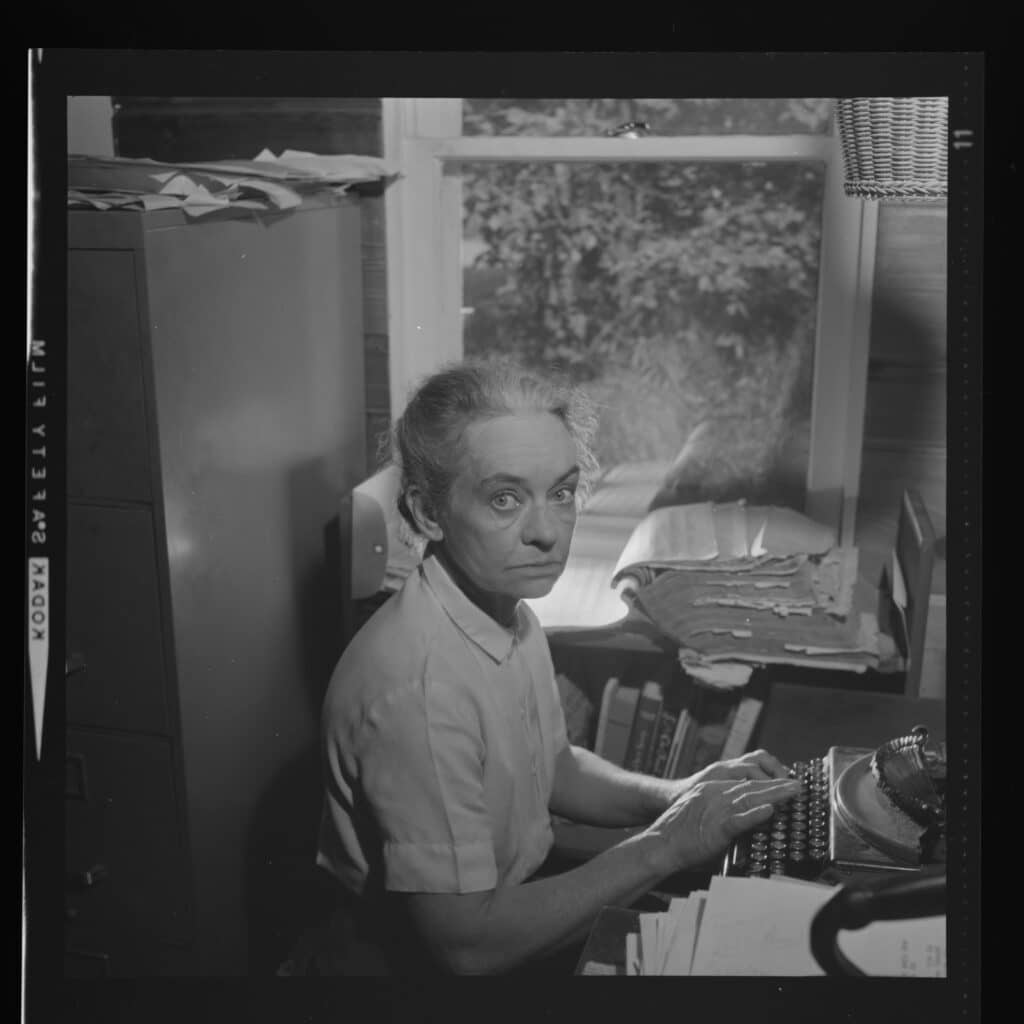
I write by lantern light with the typewriter over my knees. Outside, another white fog is rolling in from the river and the high weeds that grow through the deserted porches, the broken windows and sagging floors drip with fog and dew. We came in yesterday after leaving half our trailer load at a cabin at the end of the gravel road, for the four miles of dirt road were too much for Henry, the Ford.
Coming down with another load a month ago, the brakes got so hot they smoked.
Last night, after getting here about 8:00 o’clock, we were thankful for the mattress and springs we laid on the floor a month ago and fell sound asleep after eating a supper of cold baked beans.
September 2
Harold got in about 10:00 o’clock last night with a red cow with a white face, and a little black bull also white-faced; cost $46.00. He brought them over the rough road in the trailer, backed the trailer against a bank and began the business of unloading.
The trailer is a two-wheeled affair made to balance in the middle. The cow rode with her head tied to the front end, and naturally most of her weight was there, and naturally the trailer tipped down in that direction, and the more the trailer tipped, the more the cow scooted toward that end and the calf too. They had to be unloaded from the back end, and there was a problem in physics, getting an unwilling thousand-pound cow up the steep, slippery inclined plane of the trailer backwards. He jacked the front end as high as it could be jacked, even lifting Henry’s rear wheels well off the ground, but all to no purpose.
The cow got restless and made terrific lunges against the trailer sides. Harold swore, and I prayed and held her head, or tried to. The calf got under her, and when it seemed that she would kill it, Harold went in and pulled it out by the tail. The calf tossed its head a time or so, then it began nibbling grass, but though we had a live calf, it still looked as if we would have nothing more than a mess of beef from the cow.
It ended with Harold letting the air out of the tires to make the trailer lower, then browbeating a friend into going with him into the trailer, each catching a hind leg and pulling out the cow. Once out, she, like her son, began to eat grass.
I dread tomorrow. Harold will then begin the business of milking her. He has never milked, and to me, she looks like a brute with a mind of her own.
September 3
The cow, shut away from her son all night, bawled at daybreak and rolled us out into the cold foggy dawn. I gave Harold one of my stewpans, and together we herded the calf to the gate and the waiting cow. Harold opened the gate, the calf frisked through, and Harold, after a moment’s dubious survey of the big beast licking her calf, rushed through the gate to her right side, squatted under her and began a struggle with the greedy calf. The cow stood patiently, even though we gave her no feed, and Harold emerged with about a pint. Both Harold and I wished we could measure the amount in the calf’s stomach.
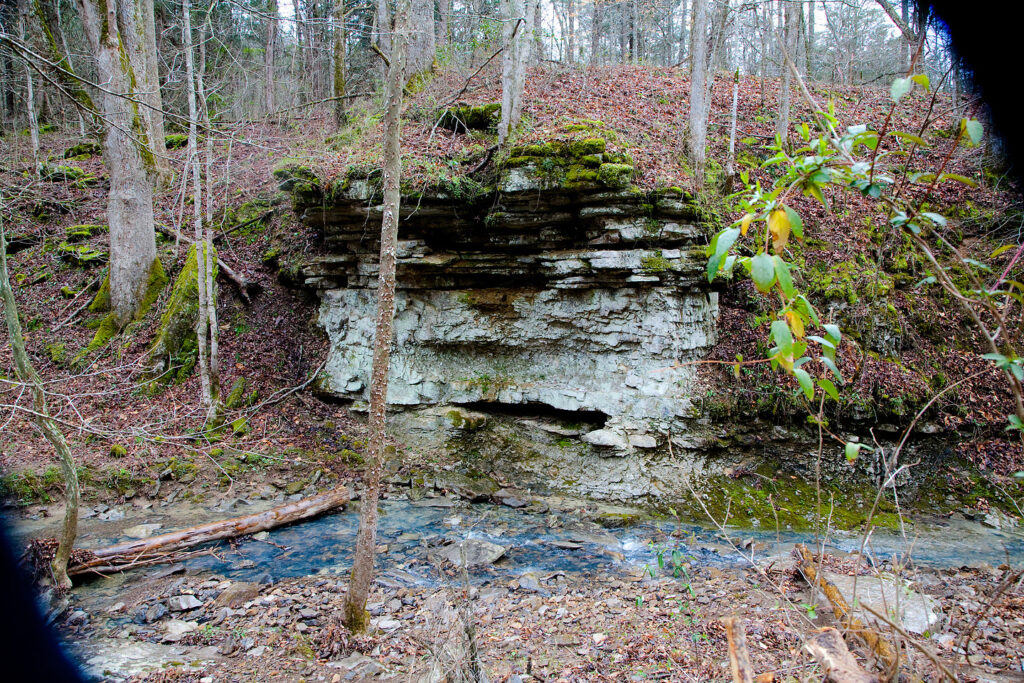
After breakfast, Harold and I climbed a distance up the hill pasture and looked over the land and what we could see of the farm. The soil there seems fertile, laid down in benches rather than in one straight sweep of hillside, so that after all these years of neglect, erosion is not as bad as it might be. A strange, lush land it seems, where the wounds of the earth heal themselves. We found old gullies, half as deep as the house, but filled now with young pine and well-padded with varieties of wild grass and clover.
It seems horribly big and demanding somehow, two old farms, the natives say, contain more than 250 acres wandering down to the river, embracing a graveyard, a creek with waterfalls, a hill in cut-over timber, river bluffs, a coal mine, and a schoolhouse where about 15 pupils attend seven months in the year.
Dozens of giant apple and pear trees have rotted until they no longer bear fruit – what little is borne is of inferior quality, wormy and scraggly as the twigs on which they grow. The scattered crop of corn, grown in many little patches where the soil is fertile and free from brush, is full of weeds, though much of it is quite good, standing 16 feet high with two big ears. The springs are choked with years’ accumulations of soil and leaves, with the spring house long since torn away and burned.
September 5
Harold went into Burnside today for a load of supplies and brought back my sister Lucy, who, after one glance at the house, remarked that we should have our heads examined for coming to such a place. . .
_____________________________________________________________________
The following excerpts demonstrate how Arnow’s lived experience in Southeast Kentucky—and the reverence she retained for the region after leaving— was distilled into her published works.
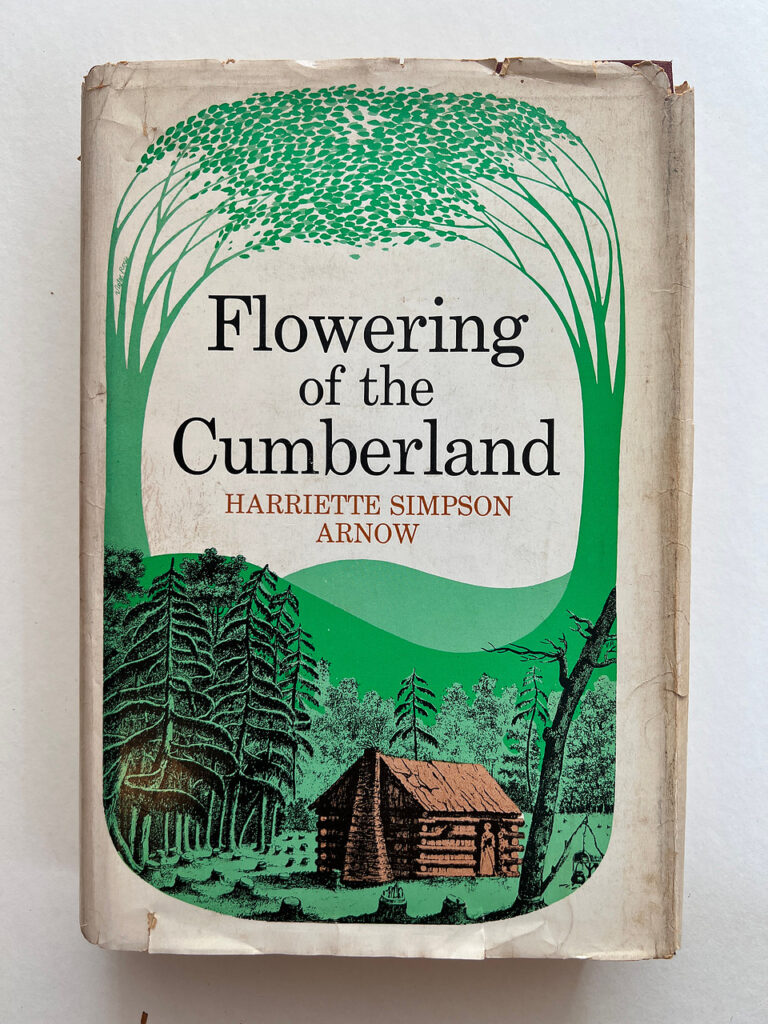
Few places on earth have ever held so much of beauty and of wonder as did the varied lands of hills….
[The woodlands were] “a constantly changing world that held something of interest and often of value—chestnuts, an unusually fine arrowhead washed into the gullied road, a swan on the river—for rich and poor alike. There were hundreds of different plants, many more beautiful than most in any garden—Virginia cowslips by the river, the wonder of a freshly opened passionflower half hidden in the bushes, witch hazel flowering in November, and on hills and ridges high enough for sandstone, azaleas, laurel, ivy, now and then in a rich cove, wahoo; and all over the little things, seen less maybe by the sharp-eyed boy hunting squirrels than the old woman gathering ratbane—tiny bluets sometimes in February, earlier than arbutus, and later the fragile wild columbine growing on limestone bluffs below pawpaw thickets where now and then one might glimpse the rich red brown of a wild ginger flower.”
—From Flowering of the Cumberland
Early in the spring, the cow had wandered deep into the woods.
It was while hunting the cow in the wild woods of the National Forest behind the house, she had first seen the hawk. He had not come in high, proud flight, but low with shrill, angry cries that told her better than words to be gone. She had walked on, not wanting to anger such a fine bird. His cries continued; soon, a second hawk cried out at her. She looked up; this one was smaller with a different voice, nor did it come so low, nor fly so widely. It had fluttered, more than circled, around the broken-out top of a tall maple. She’d tried to hide behind an oak to watch and try to see the nest she knew was high in the broken-topped maple. She’d learned there was no hiding from hawks and hurried away. Worried that she might have caused them to move their nest, for it had seemed too early for eggs, she’d gone back to that part of the woods a few weeks later…”
—From The Collected Short Stories of Harriette Simpson Arnow: “Love?” is about a twenty-year-old bride’s curiosity about the natural world.
They crossed the pasture and she saw the dark woodland sloping away
over the hill down into a narrow valley and up another hill, and past that hill she could see nothing, for it was higher than all the other hills, so high it was like a mountain with its crest hidden in shifting, shimmering fog. That, she knew, was where she must go…
—From The Collected Short Stories of Harriette Simpson Arnow. “The First Ride” is about a free-spirited young woman’s dream of a thrilling horseback ride across land she loves.
Harriette Simpson Arnow’s work appears with permission from the Arnow estate.
KNLT is grateful to Pat Arnow, Wanda Worley, Sandra Ballard, and Maureen Arnow for their assistance with locating and organizing information and materials for this post.
About Kentucky Natural Lands Trust
KNLT is a nationally accredited nonprofit working to protect biodiverse and climate-resilient landscapes in ways that benefit communities. Through partnerships with individuals, nonprofits, government agencies, and businesses, KNLT has safeguarded more than 64,000 acres of wildlands throughout Kentucky and Central Appalachia.
Projects like these would not be possible without the support of our donors! Join our movement!
For more information on how you can help KNLT protect wildlands, sign up now to receive our monthly newsletter.
________________________________________________________________________________________
Banner image courtesy of Herb E. Smith
Harriette Arnow by unknown photographer, courtesy of the Arnow estate. Photograph held by UK Libraries Special Collections Research Center
Historic photo of Keno farmhouse by unknown photographer, courtesy of Wanda Worley
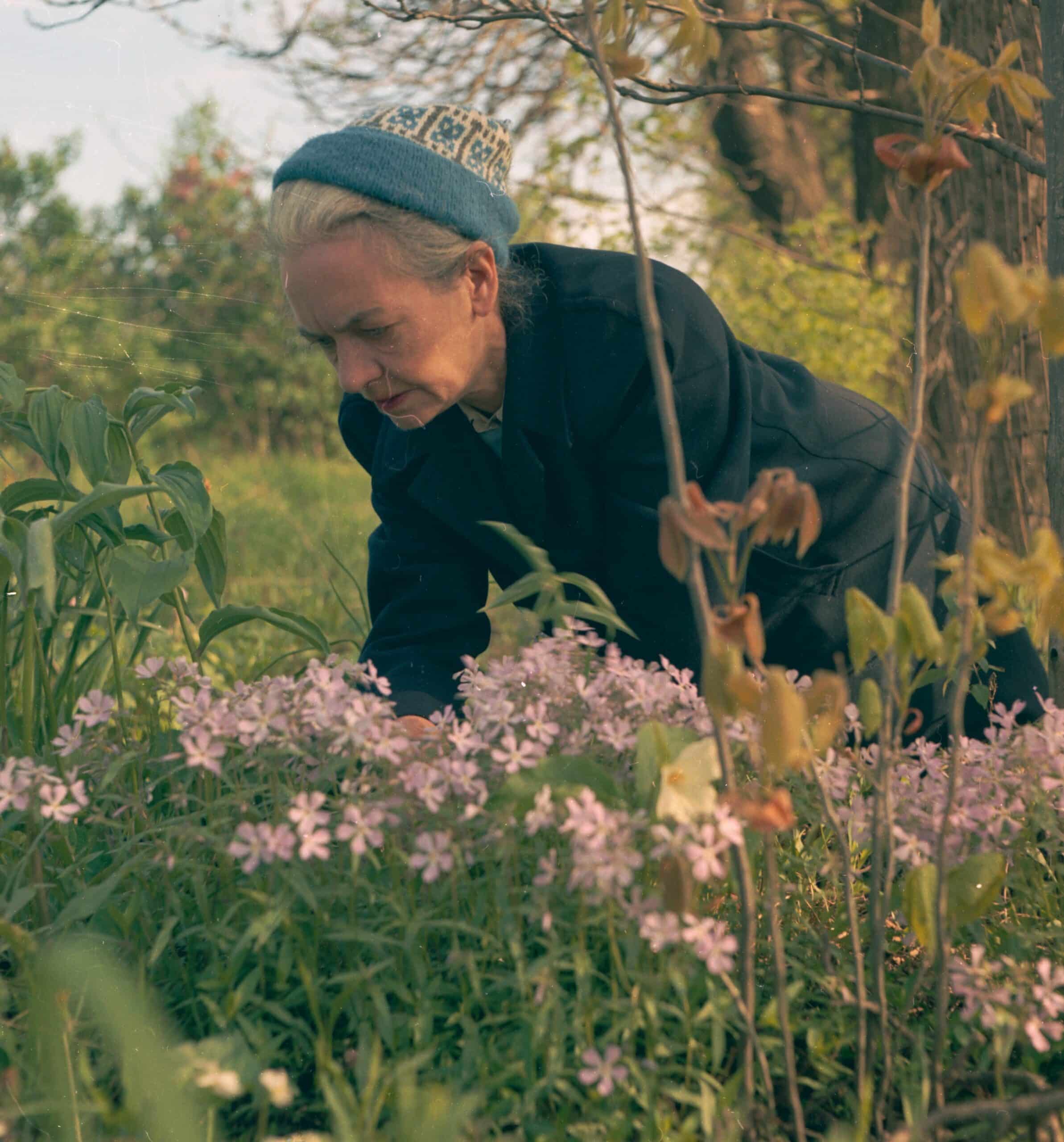
Author in garden by unknown photographer, courtesy of the Arnow estate. Photograph held by UK Libraries Special Collections Research Center
Harold and Harriette Arnow photo by Steve Giles, courtesy of Wanda Worley
Headshot of author by unknown photographer, courtesy of the Arnow estate. Photograph held by UK Libraries Special Collections Research Center
Flowering of the Cumberland book cover and landscape photo by unknown photographers, courtesy of Pat Arnow